Showing posts with label customs. Show all posts

Wednesday, May 15, 2019

Discipline and containment


6pm, the sunset starts. Meanwhile, families gather around the table, ready to enjoy a copious dinner after a whole day without eating or drinking anything. This is iftar, the meal when people break the fast during Ramadan, the holy month in Islam, which started on May 6th. This is the first time I am in a Muslim country during this event, which affects everyone’s life, regardless each one’s religion.
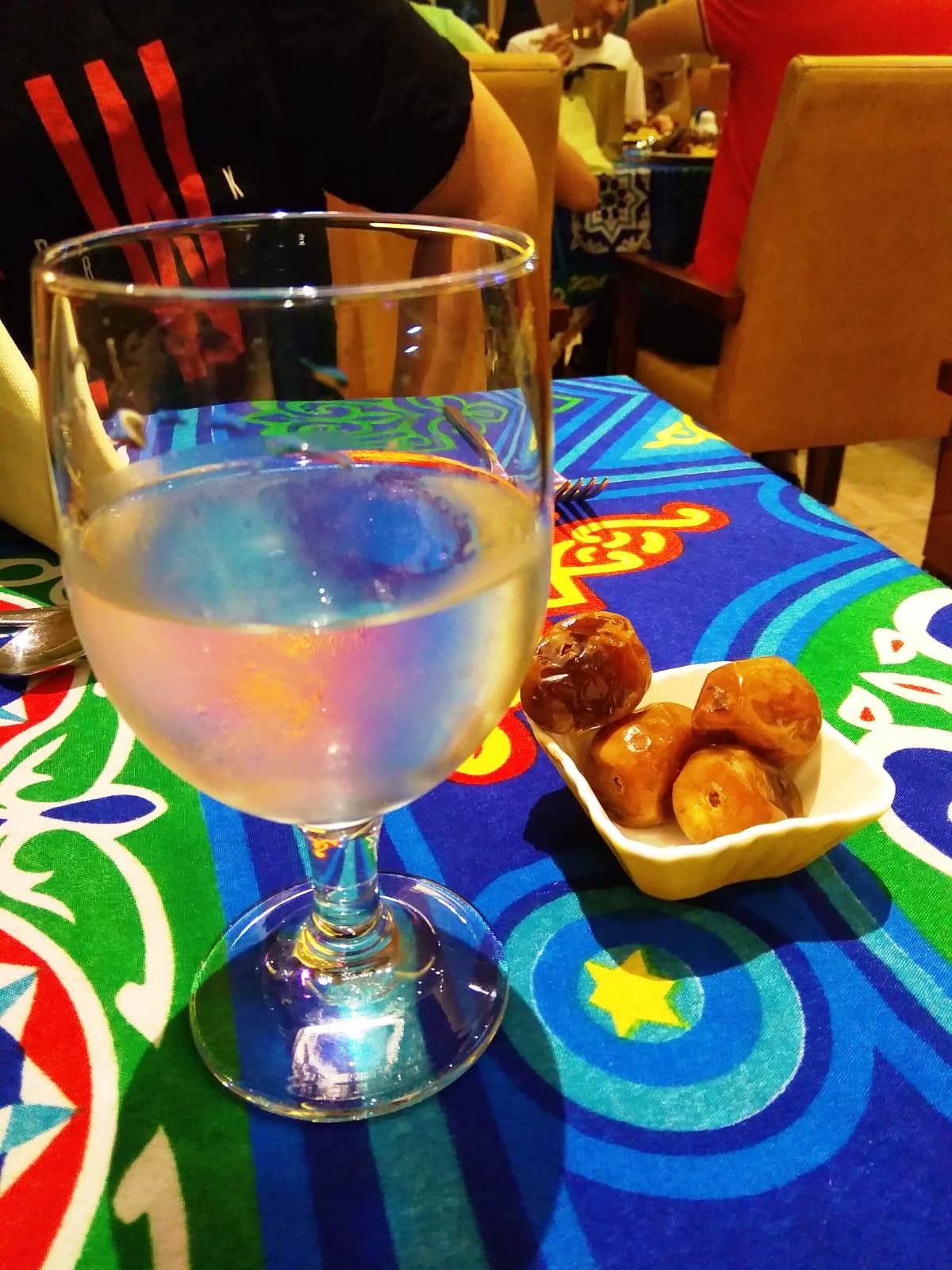


Fasting or sawn is the most known characteristic in this period and it is one of the five pillars of Islam. It starts at dawn, right after the suhur, a strong breakfast to resist the rest of the day, and it ends with the sunset. During this time, eating, drinking (even water) and having sexual relationships are forbidden for the Muslims. Elderly people with health problems, pregnant women and children younger than 12 years old are exempt from this practice. Besides fasting, the Muslims also celebrate these days of sacrifice and spirituality, performing good deeds, helping the most needy people and giving alms, action known as zakat, another pillar of the Islamic religion, which happens more often these days.
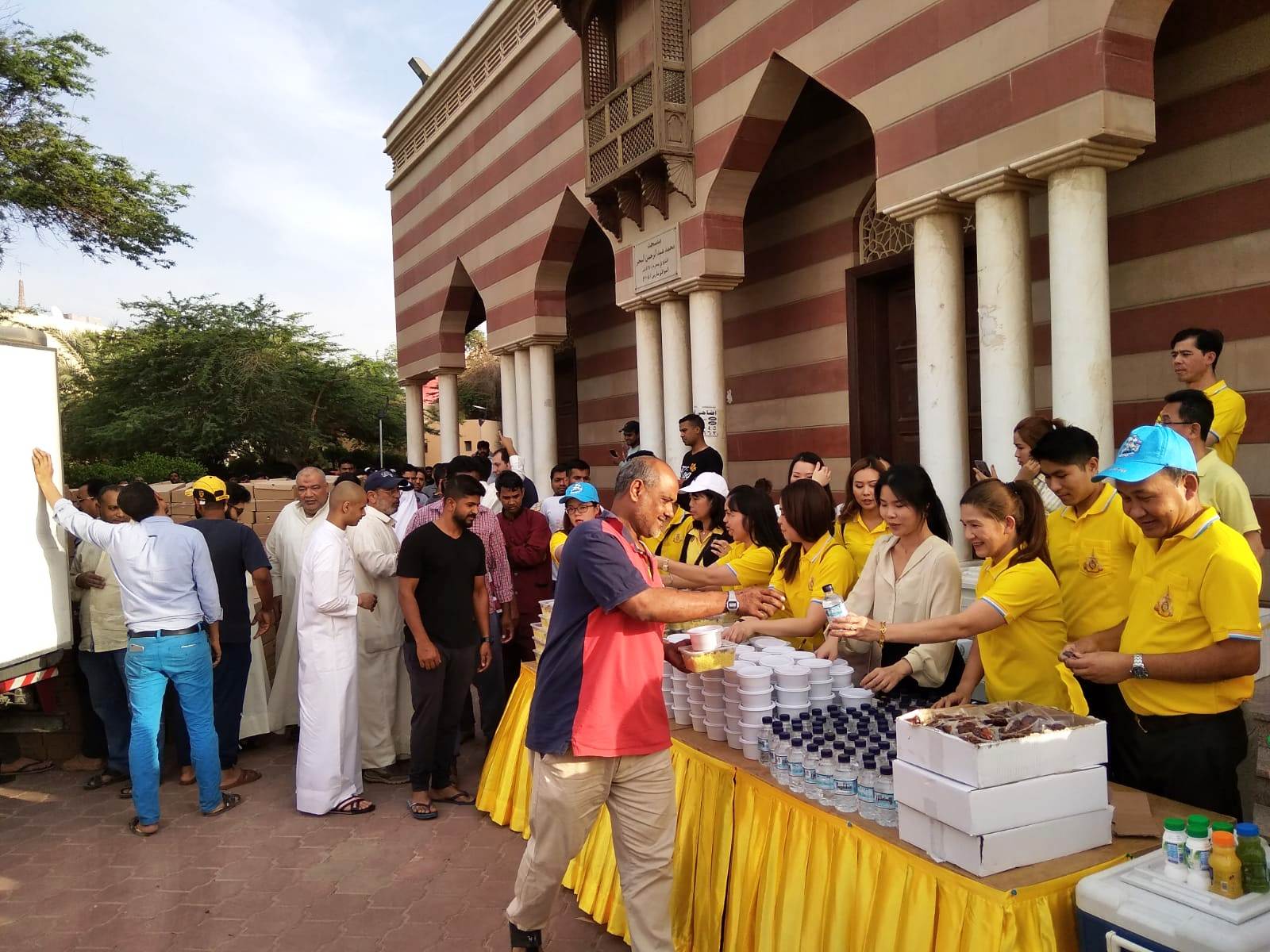
 
Donation of food organized by Thai Embassy
About my daily life, in this month we have a reduced work schedule and less students in the classrooms. The shops also modify their opening time these days and some of them close completely during the whole month. The obligation to stop eating and drinking during daytime is also applied to Non-Muslim people. Any person, regardless his/her religion, who can be seen breaking the fast or smoking in the streets or any other public place can be penalized with a 100 KD (almost 300 euros) fine and one month in jail. mes de cárcel.

Many shops and supermarkets offer discounts during this month
But, beyond the restrictions related to Ramadan, I would like to highlight that it is also a good occasion to celebrate meetings with relatives and friends, where happiness, generosity and solidarity truly reign. This happens almost everyday after sunset. In part, it can be perceived as something equivalent to our Christmas events in our Western countries. Certainly, it is worthy to attend some of these celebrations if you have the chance and sharing the moment.


¡Ramadan Kareem for everyone!

Tuesday, September 11, 2018

In the name of the father (and the grandfather's, the great-grandfather's...)


In these first days at the school, one my usual tasks is to manage the personal files for each student, arranging those who just joined this year. After checking the names and surnames of the students before entering their files in the archive, I could noticed, in certain cases, the remarkable length of some of them. That leaded me to investigate a bit more about the interesting world of the Arabic onomastics.

The 99 names of Alah, in the dome of the Grand Mosque of Kuwait
Abdullah Ahmed Mohammed Faisal Ali Abdul Aziz Al-Mubarak. This is a fictitious example of what any name could be in the Arabic countries. Nowadays, it is true that the way to name a person became more simple, using just a first name and a family name (called nisbah), but traditionally the name of a person also includes the name of the father, the grandfather’s and, sometimes, even the great-grandfather’s and other previous generations. Technically, each of these names should be followed of the particles ibn (“son”) or bint (“daughter”), but in most of the Arabic countries they are omitted.

Monument of the Cordoban poet and philosopher, Ibn Hazm (source: Wikipedia)


Sometimes, there is a word preceding the name, called kunya, expressing respect and honor towards other person. Some of the most common are Abu (“father”), Umm (“mother”) or Abdul (“servant”). One of the most frequent mistakes we commit in Western countries is separating the kunya from its related name, considering it as a name apart. For example, if we call someone just Abu, it would be like if we call him “someone’s father”, it wouldn’t make sense without the posterior name.

Kareem Abdul (servant of) Jabbar (source: Pinterest)


This way of naming could explain why, since I am here in Kuwait, every time that someone submits an official document with my name, most of the times they use just Francisco and my second surname (in Spain we have two surnames), assuming that it is my family name. My second name (I have a composed name) and my first surname usually are omitted since, possibly, they can be considered as my father’s and my grandfather’s name. Do you have any experience like that with your name being in an Arabic speaker country?

See you next time!

Monday, March 5, 2018

Deeds, battles, lands and swords


Few days ago we had a four days holiday, which was great for me to recover energies and catching up with some stuff. Besides Friday and Saturday, we were off on Sunday due to National Day of Kuwait and Monday, when the 27th anniversary of the end of Iraqi occupation during Gulf War in 1991 was celebrated. During these days and the previous weeks, the whole country was full of flags, pictures of their governors and other symbols I will talk about in this post.


Originally, the celebration of the National Day was on June 19th, day in which Kuwait gained independence from United Kingdom, in 1961. However, two years later, this holiday was moved to February 25th, the day when the emir on that period, Sheikh Abdullah Al-Salem Al-Sabah, started to govern. The main reason of this change was the extreme temperatures in summer here, too hot for Kuwaitis to go out and celebrate as they like. Basically, people gather in the main avenues and parks (mainly around Gulf Street area), most of them wearing their flag colors, having picnics, barbecues, while the youngest ones play with water guns. It is also very usual that children throw water balloons to every vehicle passing by, so it is better to close the windows if you are driving around these days.


Regarding the national symbols, I will star with the flag, with black, green, white and red colors, characteristic in many Arabic countries. The meaning of these colors come from the poet of the XIII centurySafīaddin al-Hilli,, in one of his poems saying this:
       “White are our deeds.

       Black are out battles.

       Green are our fields.

       Red are our swords.”
Thus the white color means the purity of the deeds, the black represents the defeat of the enemies in the battles, green is for the fertility of the Kuwaiti lands and red color means the blood in the swords. 


About the emblem of Kuwait, besides the flag, includes also two important symbols in this part of the World. On one hand, in the middle there is a dhow (a traditional sailing ship) in the sea, illustrating the important maritime tradition of this country. This boat is framed by the wings of a falcon, the most representative bird, not only of Kuwait but other countries in the Middle East. Falcon was also a the symbol of the Quraysh clan, which prophet Mahoma belonged to.

Source: http://es.althistory.wikia.com


With regard to the anthem, it has been used since 1978, and its lyric is a sequence of blessings for the country and its history, wishing safety, glory and good fortune for the future, while at the same time the values of faith, loyalty and truth are extolled. In my school it is sung every morning by Primary students to stat the day. I think is very cheerful and lively, within its solemnity. Here you can listen it:


For me, the best of these days was, not only the holidays and having a rest, but also seeing the way in which people in Kuwait celebrate these dates. This is something I missed when I was in China, where there are almost no celebrations in the streets, besides the firecrackers in New Year Day. The atmosphere and the color in the city these weeks were wonderful, together with a very nice weather, perfect to go out. I hope that it will continue like that at least for one more month.  

Sunday, December 17, 2017

Over the hump


Few days ago, AWARE association organized another great activity for foreigners in Kuwait to discover some costumes and particularities in this country. This time were the camel races, an event which is celebrated between November and April, and it normally attracts both locals from all kind of social sphere and visitants who want to know more about this peculiar tradition.


Camel races are not just taking place in Kuwait, but they are also popular in other countries in the Middle East. The main difference compared with other places is the use of remote-controlled robots instead human jockeys. It was normal before that short height people and even children do this role. Humanitarian organizations used to be provoked into outrage by this and their pressure convinced the organizers of the races to use new technologies since 2005. The robot is a small artifact with a plastic stick emulating a whip, which is hitting the camel on the back during the race. Meanwhile, the owner of the camel follows the race inside a car, directing robot’s movements using a kind of remote control.


The distance covered by the camels (although I think it is better to call them dromedaries because they only have one hump) in a race depends on their age. The youngest ones run 3 kilometers, while the oldest ones can finish up to 11 kilometers tracks. The maximum speed this animal can reach is around 65 km/hour. Normally light complexion camels are selected for this competition, and they are usually trained in special farms with a strict diet composed basically by milk, corn and some vitamins.


The fact of using animals for races, considering that they can suffer, outrages logically animal rights groups. However, although without any intention of justify this cultural practice, the camel is one of the most valued, beloved and well treated animals in Kuwait. I don’t have any doubt if I think of everything camels can contribute, such as means of transportation through the desert or providing food, like milk and butter, which we could try just there.


  I have to admit that the races didn’t make feel too many emotions; actually I felt a bit uncomfortable watching those devices shaking their sticks, but at the end it was not so bad. It was a good opportunity to leave the city, reaching the border of the desert, and having the chance to see closer these animals. Some of them are quite tame and you can stroke them, but with others you have to be careful. If you have some free Saturday, don’t hesitate and go to the Kuwait Camel Racing Club to have a look, it is actually a curious and different experience.


Monday, November 27, 2017

Game of divans


If you walk (or you try to walk) in Kuwait and you pay attention to the entrances of the houses, you will discover that sometimes there are some divans forming an inverted U. Here is where Kuwaitis gather together to celebrate one of the most entrenched costumes in the country, representing one of the main pillars of socialization and communication. It is the called “diwaniya”, a gathering sometimes about political and social topics, or merely to spend time chatting, eating and drinking tea in a relaxed atmosphere.


The diwaniyas can be both private (among closed groups of friends or relatives) or public, where everyone can participate and give some opinions. In this case, people discuss generally political topics, like a small citizen’s assembly, providing active participation for the people. They are especially active during election periods. This kind of meetings are a good examples of the level of freedom of speech existing in Kuwait, with more democratic participation than other countries in this area.

 
Tea and sweets, always there


According to what I heard, it is not usual that a foreigner can be invited to participate in a private diwaniya, although it is normally possible to join to any public one, as long as the language is not an obstacle. I already commented in another post that AWARE association organizes discussions every Tuesday, mainly for foreigners in Kuwait, where a moderator holds a debate in English around several topics related to cultural exchange between Western and Arab culture. In these events, not only you can learn interesting information, but they are also a good opportunity to meet new people, something which is not very easy in this place as we already know.


I am glad to know that traditions like this one are being kept, with debates promoting the dialogue, the understanding of other realities and the critical thinking, in this World where people tend more and more to criticize with resentment and without any base, from the anonymity of social media. We have to go out more, knowing, discovering and experimenting and, if it is possible, debating with other people face to face, with empathy and without blind hatred. It is a way to improve somehow the coming prospect we will need to face. 

Monday, November 6, 2017

Abayas, dishdashas and other clothes


One of the most shocking and, at the same time, disturbing things to see when one arrives to Kuwait, or any other country in Persian Gulf, is the amount of women wearing completely in black, many of them showing only the eyes. This only reinforces the theory saying that we tend to perceive with more attention what matches with our previous expectations. This leads us sometimes to distort reality. Strangely enough, there are other women, at least in this country, who goes with uncovered hair, and some of them prefer wearing in western clothes (I have even seen some girls in bikini in a public pool). Few days ago I attended to a cultural conference about clothing in Kuwait and Arab countries in general, and we discussed about this and other related topics I will comment now.


The main traditional attire for women is called abaya. It is a long, floor length tunic, usually made in polyester or silk, in black colour. It is wore together with the hiyab or the cloak used by women to cover their heads and, sometimes, with the niqab, the veil which they cover their faces with, showing only the eyes. The reasons of why they use this clothing, with or without niqab, are merely religious and cultural, and it will depends on the degree of religiosity or traditionalism of each woman. That is to say, at least here in Kuwait, using abaya and covering head and face is not obligatory, although there are countries like Saudi Arabia where it is mandatory in all public places.

Continuing with the female attire, the abaya is not the only traditional clothing for women in Kuwait. There is another dress, also long but much more colorful called daara. It is used usually for special events, such as weddings and other celebrations, but also there are girls who wear this for going out. The daara can be in different colors and designs, and it is normally decorated with embroidery and filigrees.


About men clothing, the most traditional ones wear usually a long white tunic called dishdasha, with trousers in the same color. On the head they wear a kind of cloak, known as ghutra, which can be in different colors, mostly white or a design of red squares, resembling those typical Palestine scarfs. The ghutra is topped with a double twisted black cord, the agal, in order to keep the cloak in its place, without falling down.

Does it look good?


It was an interesting talk where we also discussed about other topics such as the situation of women in Kuwait, what I would like to talk in a future post. About this matter, I don’t consider negative nor degrading if a girl covers her head or even her face, as long as it is a personal decision and it is not an imposition. But, well, if we stop to think about in our own dressing habits, what is not an imposition? Are we really free to decide what we want to wear? We tend to think that Muslim women are slaves of their religious values but, are we, Western people, not also slaves of our fashions and trends?
Here is the debate in case someone would like to say something about.